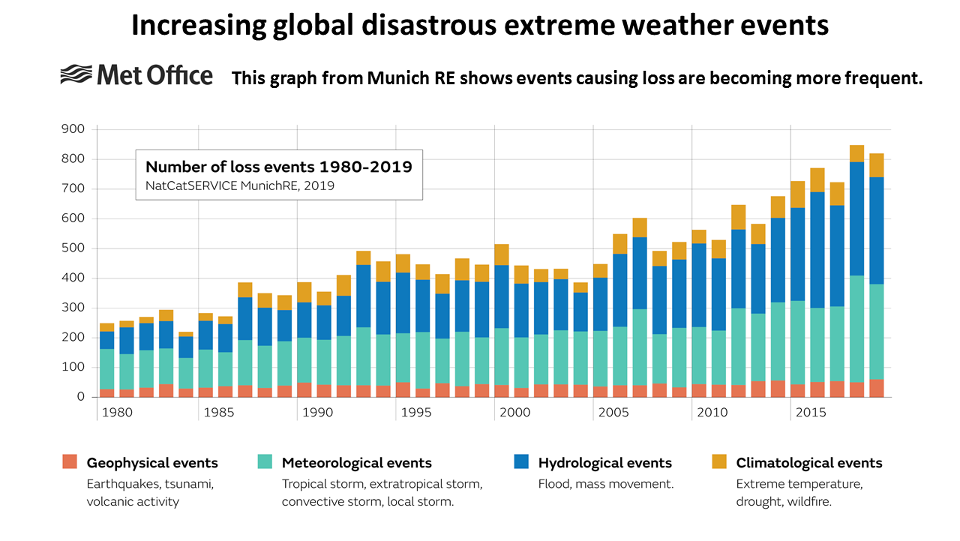
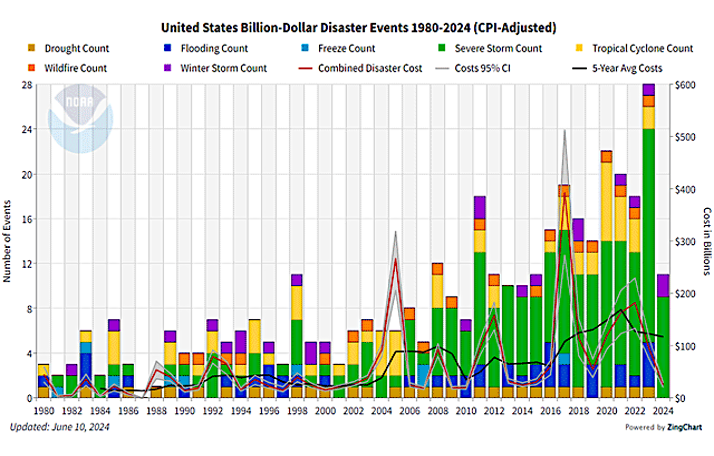
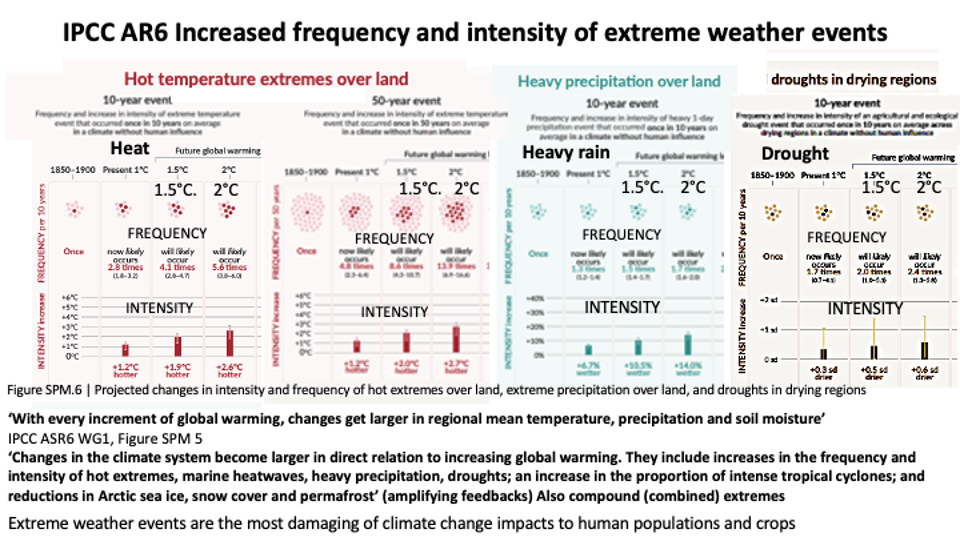
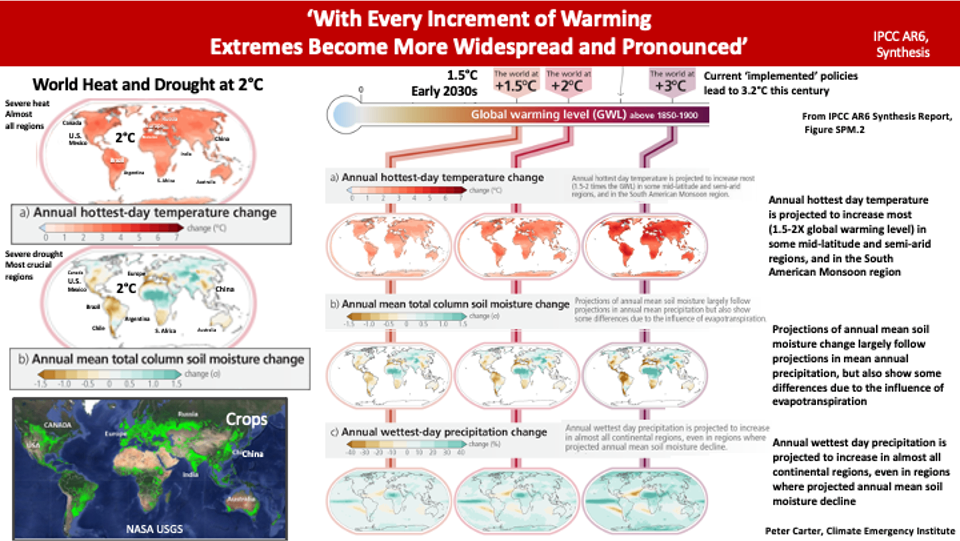
For many years climate assessments have predicted that global warming (IPCC 2001) will increase extreme weather events. Now we know they are increasing. (IPCC AR6).
March 2025, WMO report documents spiralling weather and climate impacts
The heat waves droughts and fires are increasing dramatically but so are extreme precipitation events. All of these are damaging to crops and to agricultural land increasing soil erosion.
This short video from Climate Central explains the basics of extreme weather.
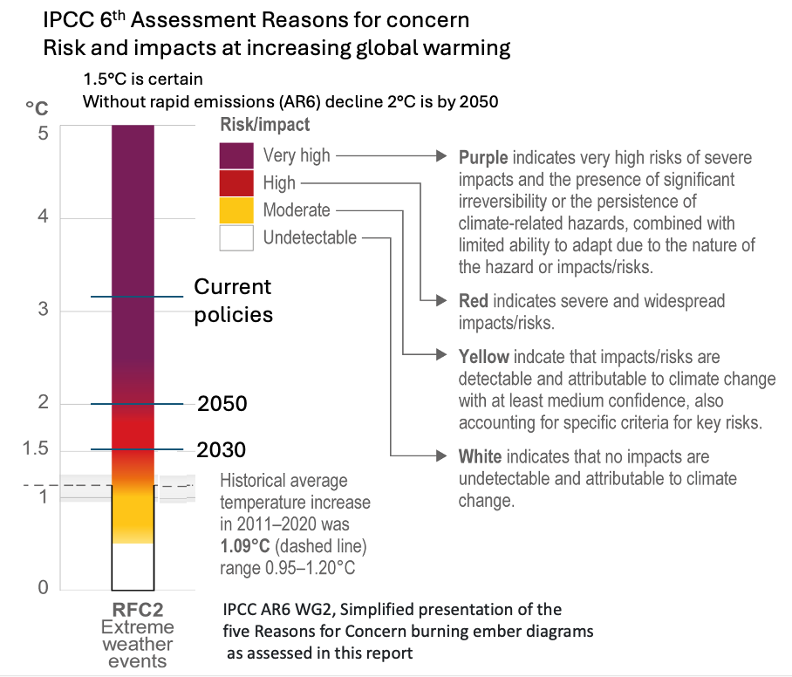
Extreme weather events is one of the 'reason for concern' category under IPCC assessments,
The rapid increase is Northern hemisphere extreme weather threatens global catastrophe because all the world's best food producing regions are in the Northern hemisphere.
This northern hemisphere extreme weather is being driven in part by the rapid loss of Arctic albedo cooling impacting of top of NH warming. Scientists have called the Arctic summer sea ice 'the air conditioner of the entire Northern hemisphere'. This air conditioning affect is from Arctic albedo cooling as a whole. The Far North snow provides about half the NH albedo cooling influence and is most important with respect to increasing NH drought. The loss of Arctic sea ice is altering the jet stream, and this is increasing all extreme weather events and also has a blocking effect on the weather prolonging the extremes (research by Jennifer Francis).
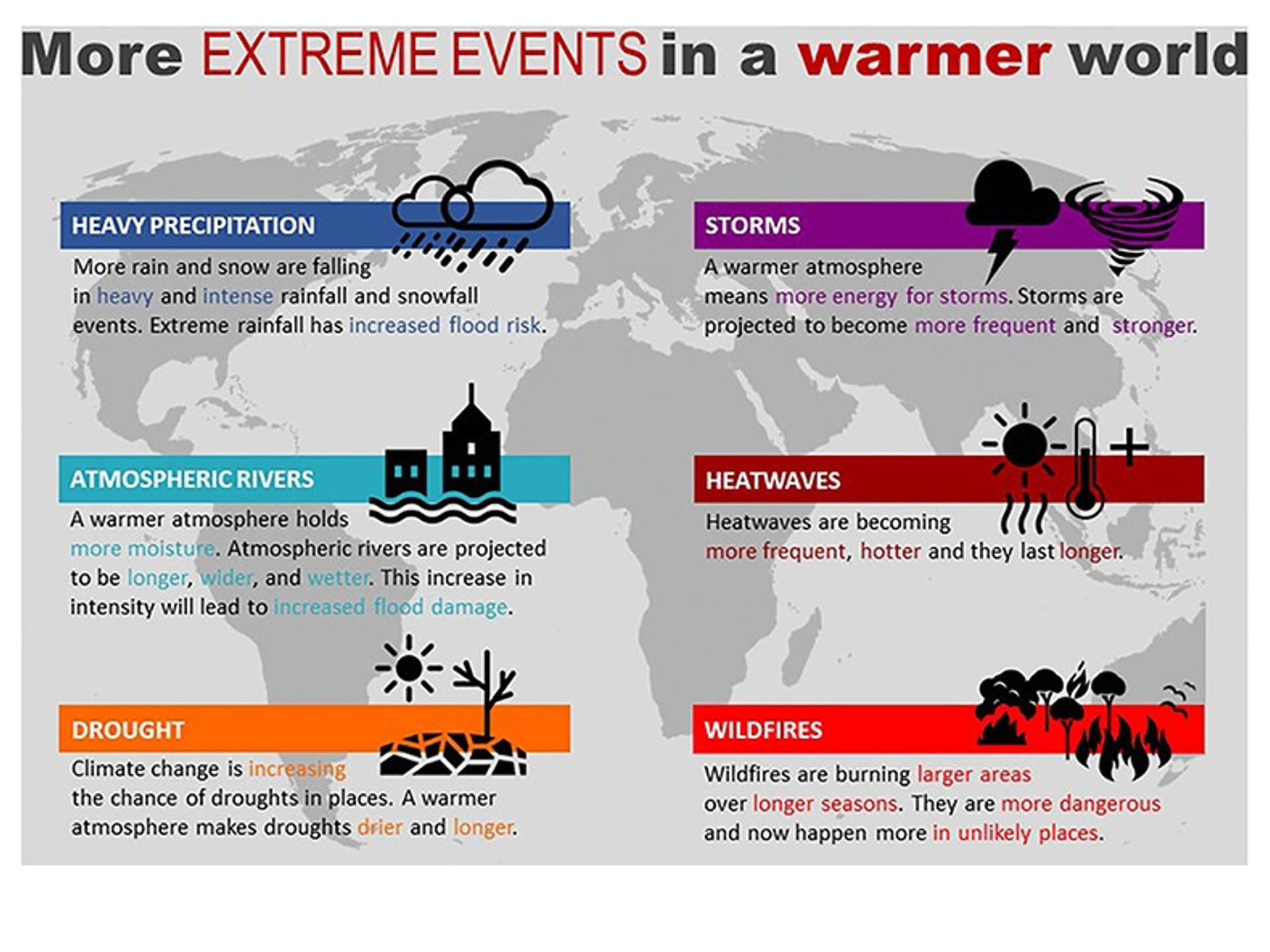
Global warming increases heat waves, drought, wildfires, storms and floods
It was always predictable by the basic science that constant atmospheric GHG pollution, with increasing GHGs in the atmosphere, would lead to increased extreme weather. Global warming will increase extreme heat leading to increased drought, which together will increase the risk of wildfires. Global warming increases atmospheric water vapor because warm air holds more water vapor, and water vapor feedback increases warming.
In fact it has been long established that for every one degree C of warming the air will hold 7% more water (the Clausius–Clapeyron equation).
The increased GHG heat in the lower atmosphere increases lower atmosphere energy energizing of the hydrological cycle, leading to stronger winds, more heavy rains and flooding.
The strength of cyclonic storms, such as hurricanes, is increased by increased lower atmosphere energy and surface ocean warming.
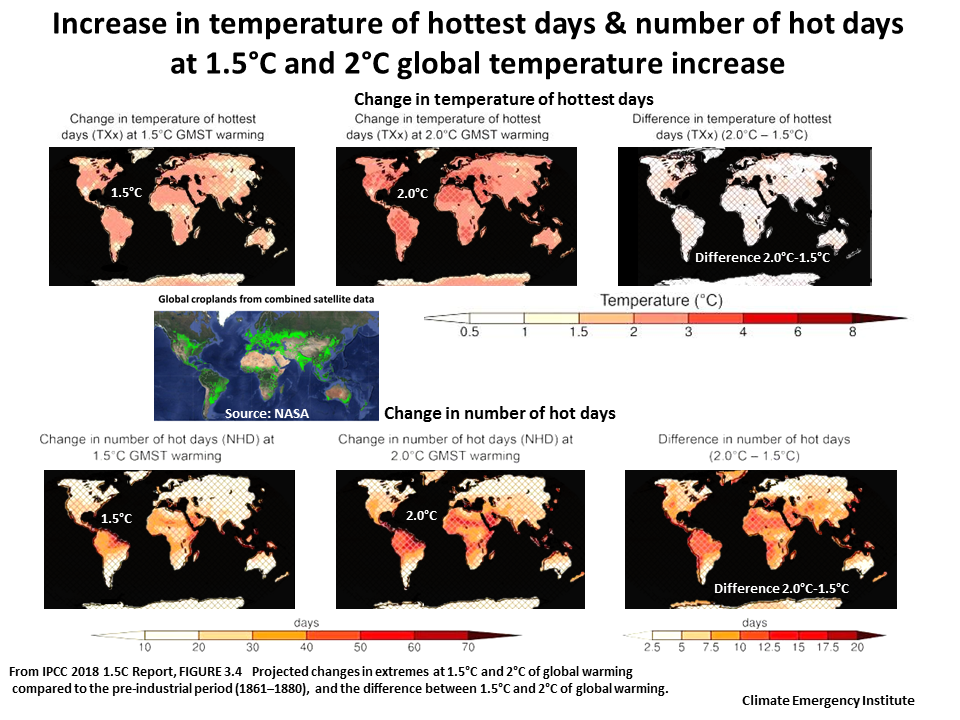
As global warming increases, climate extremes increase along with the average temperature and climate. The most obvious is heat waves.
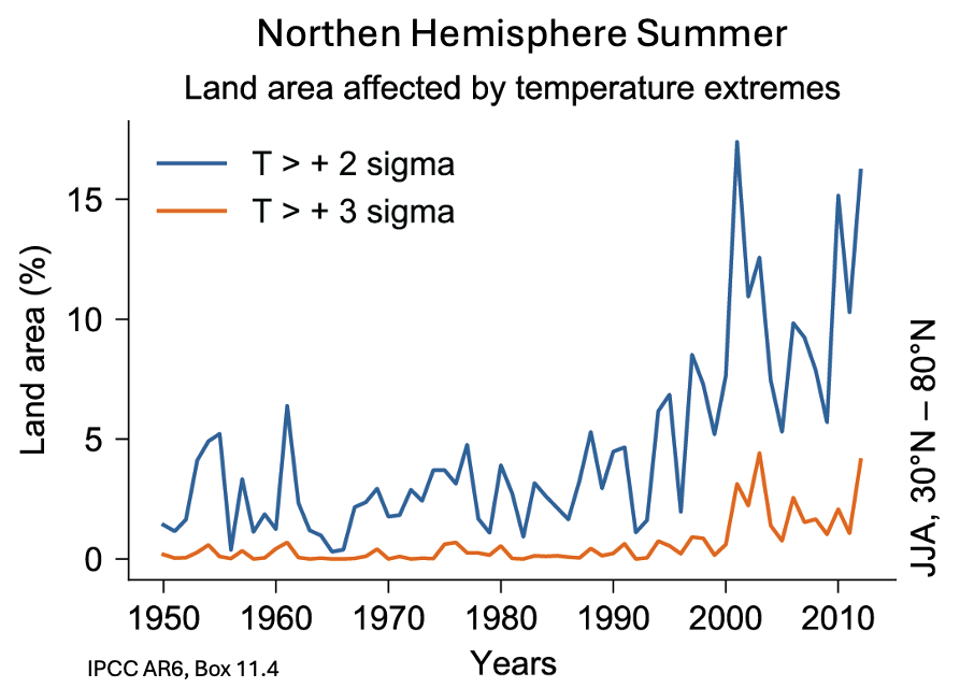
Global warming has so far significantly increased extreme heat events.
Computer models studies confirm that as global warming rises so will heat waves.
By 2040 the areas affected will have increased several fold, and we are committed
to this by climate system inertia.
Models predict a robust, several-fold increase in the frequency of such heat extremes, irrespective of the emission scenario. Unmitigated climate change causes most (>50%) continental regions to move to a new climatic regime with the coldest summer months by the end of the century substantially hotter than the hottest experienced today.
Climate science treats 'Extreme weather events' as one global climate change impact category.
The IPCC lists it as one of five Reasons for Concern.
For many years scientists have predicted that global warming would increase weather extremes.
Extreme weather is the most damaging climate change impact on both human population health (IPCC 2001) and agriculture. Therefore, the incidence and strength of extreme weather is the best indicator of global climate change damage.
It is now definite that global warming is driving the recorded increase in extreme weather, notably and especially in the Northern hemisphere.
Tropical cyclones, the most severe of which are called hurricanes in the Atlantic and typhoons or cyclones elsewhere, are the most extreme weather events.
As temperatures rise in ocean basins will also become more frequent and more intense. We are already experiencing all the others: extreme damaging heat waves, droughts, storms, rains and floods- significantly affecting the normally temperate Northern Hemisphere regions.
The cause of the NH extremes is GHG global warming and the related the rapid loss of Far North snow and Arctic sea ice albedo cooling. The NH climate is being made chaotic by global warming and its Arctic amplification.
Extreme Weather
For the near-term (i.e., by 2040), the models predict a robust, several-fold increase in the frequency of heat extremes, irrespective of the emission scenario. Historic and future increase in the global land area affected by monthly heat extremes.
Global warming IS increasing heat waves, forest fires, drought, storms, & floods.
The IPCC A records that all extreme weather events have been increasing since 1950, with human climate change contributing to the increase.
We can expect the increases will continue to 2035 and on to 2100. The terrible news about this is that we are locked into increasing climate change to 2030, due to climate inertia and momentum. So increasing disastrous and catastrophic impacts world wide are unavoidable.
Extreme weather is most damaging to human population health and their crops, and damages ecosystems.
Obviously global warming causes more heat waves. Most significantly extreme heat on land has continued to increase rapidly 'No pause in the increase of hot temperature' extremes'
It increases drought particularly in already drier regions.
If heat is extreme enough it causes drought by evaporating surface and soil moisture. Global warming increases atmospheric water vapor (warm air holds more water vapor) while the energizing of the hydrological cycle (heat is energy) leads to stronger winds, more heavy rains and flooding. The strength of tropical cyclone-type storms, such as hurricanes, is increased.
As global warming increases, climate extremes are increasing along with the average temperature and climate.
Human death toll
The mortality estimates of extreme weather (and climate in general) are large underestimates.
We have to go back to 2012 for a comprehensive estimate, commissioned by the most vulerable nations.
Climate change increased weather extremes are already killing hundreds of thousands of people according to the 2012 DARA Climate Vulnerability Monitor that estimated 400,000 people are being killed a year. Most presently are killed by the increasing extreme weather in the most vulnerable countries.
Today Millions of people are being made homeless by climate change increased weather extremes. Over the past decade, weather-related disasters have caused an estimated 250 million internal displacements globally, averaging 70,000 uprootings per day. Climate change acts as a severe threat multiplier, with three in four of the world's forcibly displaced populations now living in regions with high-to-extreme exposure to climate hazards (UNHCR, 2023).
Examples of extreme weather include both the drought and the flooding in Colorado in the summer of 2013. As this article by Climate Central's Andrew Freedman makes clear, 2013 was one of the drier years on record, an important factor in the huge, record-setting wildfires seen in that state over the summer. Then, one extreme suddenly shifted into the other, dropping half of Colorado's average annual rainfall in just a few days. Mr. Freedman's article does a good job of explaining the unusual weather conditions that caused the flood, as well as the relationship between this specific weather event and climate change. A ClimateProgress article by Katie Valentine brings home the severity of the Colorado floods very well.
Jeff Masters' summary of the extreme weather events across the globe in 2010 is available from Wunderground. He does a good job of putting that strange year in the context of climate change as well.
In November of 2013, Typhoon Haiyan (known as Typhoon Yolanda in the Philippines) set a new record as the most powerful tropical cyclone ever to strike land at 195 miles per hour. Over 6000 people died, many of them in a massive storm surge. With global warming causing rising sea levels and more intense rains, plus the likelihood of more intense winds, disasters like this stand to become more likely. A study by a team from Seoul National University suggests that storm tracks in the Pacific could also change, bringing more typhoons into Korea and China.
2014
March 21, 2018 European Academies' Science Advisory Council Report Floods & extreme rain events 4X quadrupled since 1980, doubled since 2004,
Extreme temperatures, droughts, and forest fires >2X more than doubled since 1980
Storms >2X more than doubled since 1980
UN Climate Change News, 3 May 2018
The World Health Organization (WHO) has warned that records for extreme weather events are being broken at an unprecedented rate, and that there is a real risk for the world to lose its capacity to sustain human life if the Earth’s climate is further altered by adding ever more heat-trapping greenhouse gases.
FOREST FIRES The IPCC includes forest fires under extreme weather events
The Watcher Extreme weather
Earth news & Wild fires
DWD Monthly Mean of Global Maximum Temperatures
Severe Weather Europe website
“Follow severe weather as it happens. Anywhere. Any time.”

Extreme Weather and Climate Change, NASA,
As the climate changes, the frequency and intensity of extreme weather events are increasing.
Mapped: How climate change affects extreme weather around the world, (updated interactive world map)
2022, Datastream, The Accelerating Frequency of Extreme Weather
Basic climate science makes increasing extreme events certain
Global warming increases drought particularly in already drier regions.
If heat is extreme enough it causes drought by evaporating surface and soil moisture. Global warming increases atmospheric water vapor (warm air holds more water vapor) while the energizing of the hydrological cycle (heat is energy) leads to stronger winds, more heavy rains and flooding. The strength of tropical cyclone-type storms, such as hurricanes, is increased.
As global warming increases, climate extremes are increasing along with the average temperature and climate, and will continue to do so so long as global emissions are not put into decline (as IPCC AR6)