Amplifying Climate Feedbacks
The IPCC is called the voice of climate change science.
The 2014 IPCC AR5 all important SPM (Summary for Policy Makers) reports were cursory on feedbacks, especially the largest sources in the Arctic.
Here are collected the AR5 references to Arctic feedbacks.
A 2012 UNEP report addressed the fact that the IPCC does not include permafrost carbon feedback, but the fact is the IPCC
AR5 2013-14 assessment omits all carbon feedbacks in its global warming projections.
The inevitable large degree of additional warming from these large slow feedbacks are totally excluded from the assessments because they are not included in the all important climate sensitivity. With the slow feedbacks the sensitivity is at least 6, but we still using a fast feedback only sensitivity of 3.
The IPCC 2007 AR4 included some carbon feedbacks but only as an uncertainty increasing the upper range of projected warming, that is not used for policy making (it should be). For a high emissions scenario (A2) this increased the IPCC AR4 projected warming by over 1.0C, and omitting this from the mitigation projections made for an error of 30%.
A 2013 review that included Earth system modelling found a large increase is climate sensitivity when carbon feedbacks are included, which would lead to at 50-100% increase in projected warming. "Traditionally, only fast feedbacks have been considered (with the other feedbacks either ignored or treated as forcing), which has led to estimates of the climate sensitivity for doubled CO2 concentrations of about 3C. The 2×CO2 Earth system sensitivity is higher than this, being∼4–6C if the ice sheet/vegetation albedo feedback is included in addition to the fast feedbacks, and higher still if climate–GHG feedbacks are also included."
July 2013 Review Climate sensitivity in the Anthropocene M. Previdi, et al
A 2013 study using the Canada climate model showed that zeroing CO2 emissions but not changing the other GHGs and adding in just a small permafrost carbon feedback results in atmospheric CO2 not stabilizing and global temperature slowly continuing to increase.
August 2013 Nature paper Climate Extremes and the Carbon Cycle finds extreme weather events compromise terrestrial carbon uptake, confirming that heat waves droughts and storms are a carbon feedback source. Terrestrial ecosystems absorb approximately 11 billion tons less carbon dioxide every year as the result of the extreme climate events than they could if the events did not occur. That is equivalent to approximately a third of global CO2 emissions per year.
Read more at: http://phys.org/news/2013-08-extreme-weather-events-fuel-climate.html#jCp
A 2012 published NASA study has found tropical rainforests, that have been absorbing more CO2 under the rising atmospheric CO2, may be becoming less efficient as the rainforest temperature rises. This is predicted with increasing atmospheric CO2 as a strong carbon feedback
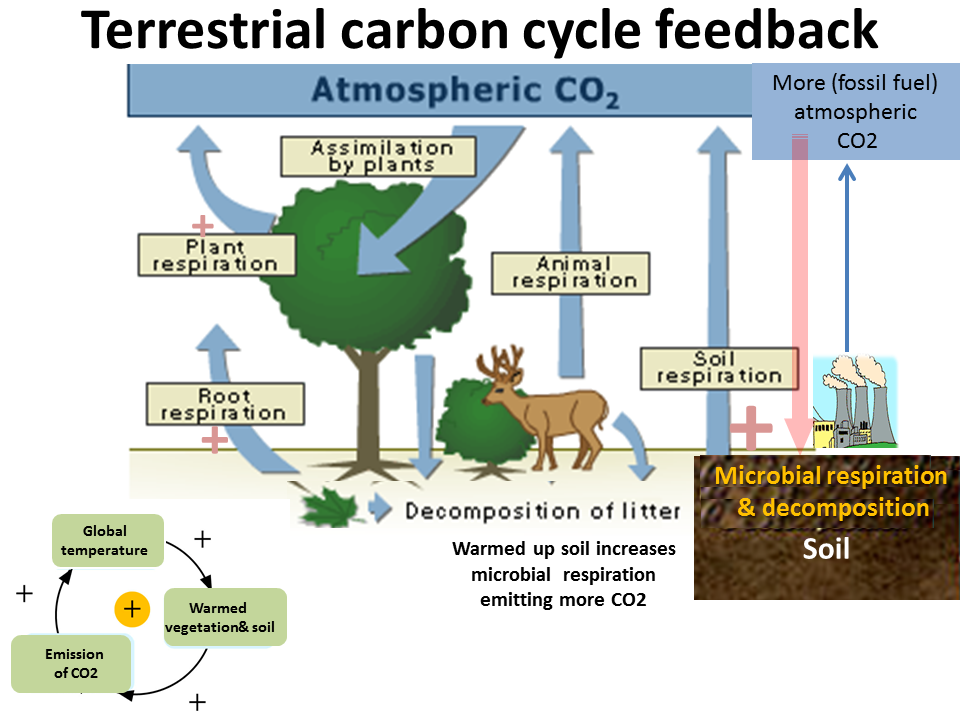
Terrestrial carbon feedback: Warming soil and vegetation emit
more CO2 as well as taking up more CO2 by photosynthesis
which a carbon feedback called the 'terrestrial' carbon feedback.
Its value projected by models by 2100 ranges from 0.5C to 1.5C.
These feedbacks are not generally classified as fast or slow,
coming some where in between. The higher range of 1.5C includes
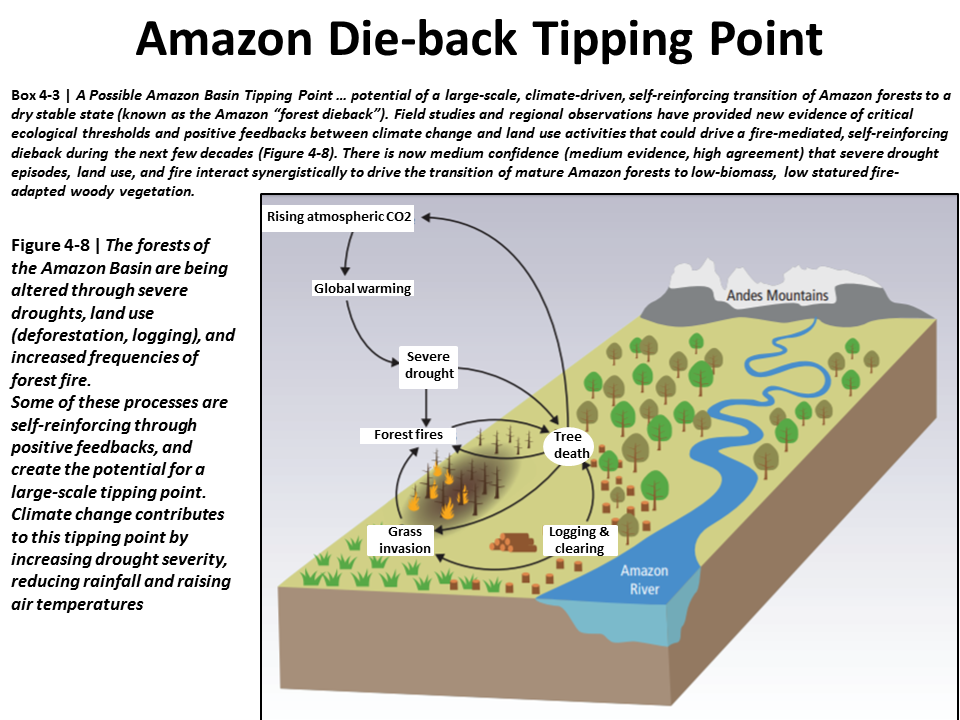
Amazon die back and all research supports the prediction of Amazon
die back from increasing drying and severe drought.
Another deferred terrestrial carbon feedback is due to today's negative terrestrial carbon feedback. More atmospheric CO2 stimulates more photosynthesis forests and wood lands, which is acting as a large sink. The planet's land-based carbon "sink" has kept 186 billion to 192 billion tons of carbon out of the atmosphere since the mid-20th century, which is warmimg reduction of 0.3C (2012 Historical warming reduced due to enhanced land carbon uptake).
Some time this carbon sink will be saturated and switch to a carbon source. Most models (2012 research Terrestrial ecosystem carbon response ) say this will happen this century and about mid century.
The IPCC AR4 reported that above 3C from preindustrial the terrestrial carbon sink become a net source, which must be avoided at all costs.
Global wetlands emit more methane when warmed- not accounted for in the assessments.
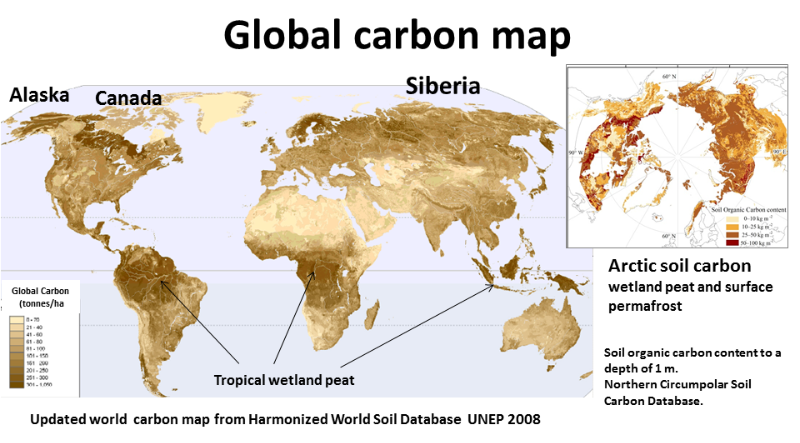
Peatlands: Vast regions of high carbon peat rich wetlands (peatlands) are emitting more carbon as they are warmed - not accounted for. These are subArctic and tropical.
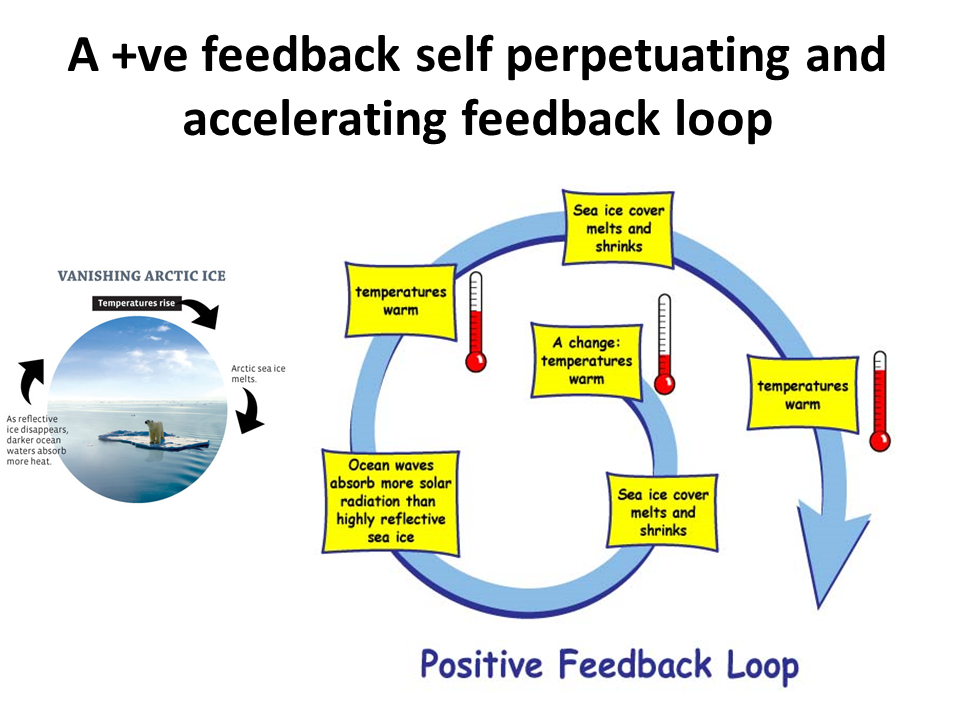
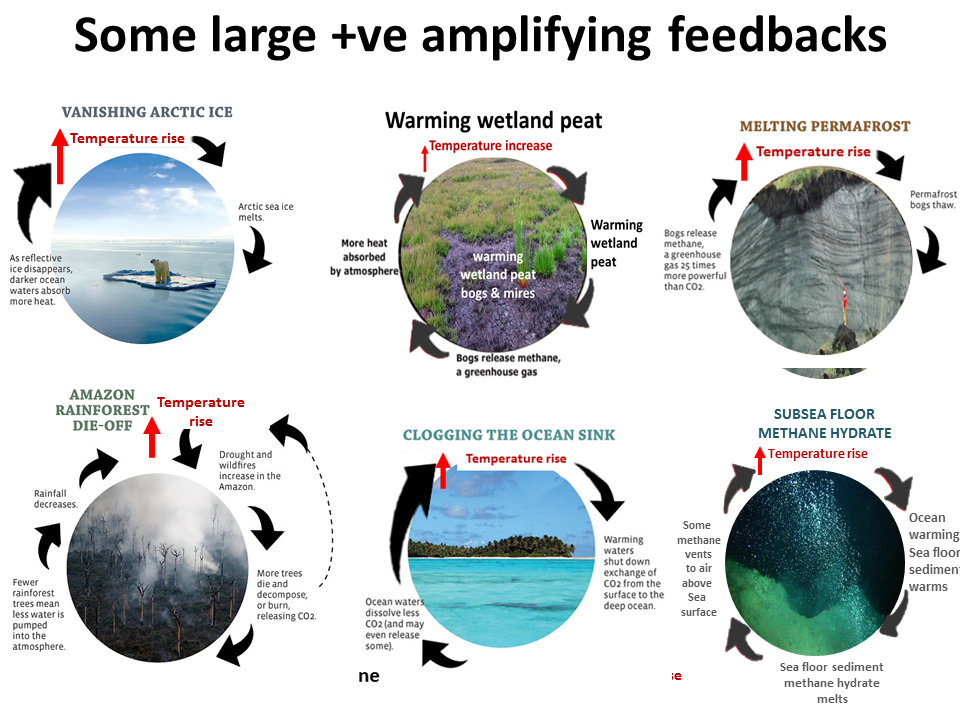
Arctic summer sea ice melting is a visible dramatic effect of global warming and it's a large feedback. The vast expanse of white ice in the summer, cools the northern hemisphere and to an extent the planet as a whole. With its loss, the rate of global warming will increase. This is not included in the climate models. The models for projecting melting rate of the Arctic summer sea ice are in error by 30 years right now. (more on the Arctic below)
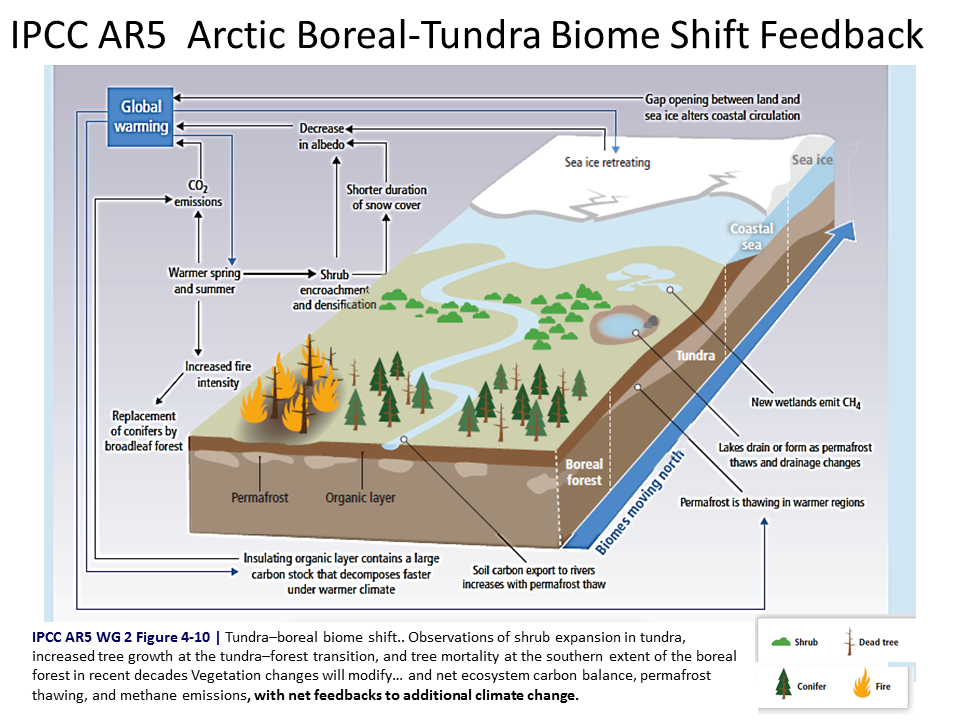
Research predicts that thawing permafrost (irreversible) will switch the Arctic from carbon sink to a net carbon source in the 2020s.
"This increases the uncertainty in the trajectory of carbon dioxide emissions required to achieve a particular stabilization level of atmospheric carbon dioxide concentration. Based on current understanding of climate-carbon cycle feedback, model studies suggest that to stabilize at 450 ppm carbon dioxide could require that cumulative emissions over the 21st century be reduced from an average of approximately 670 [630 to 710] GtC (2460 [2310 to 2600] GtCO2) to approximately 490 [375 to 600] GtC (1800 [1370 to 2200] GtCO2)."
By excluding these inevitable carbon feedbacks the IPCC instead of considering risk has included an error of 30% in its calculated emissions reduction for stabilization.
Quotes are from IPCC 2007
Arctic climate feedbacks
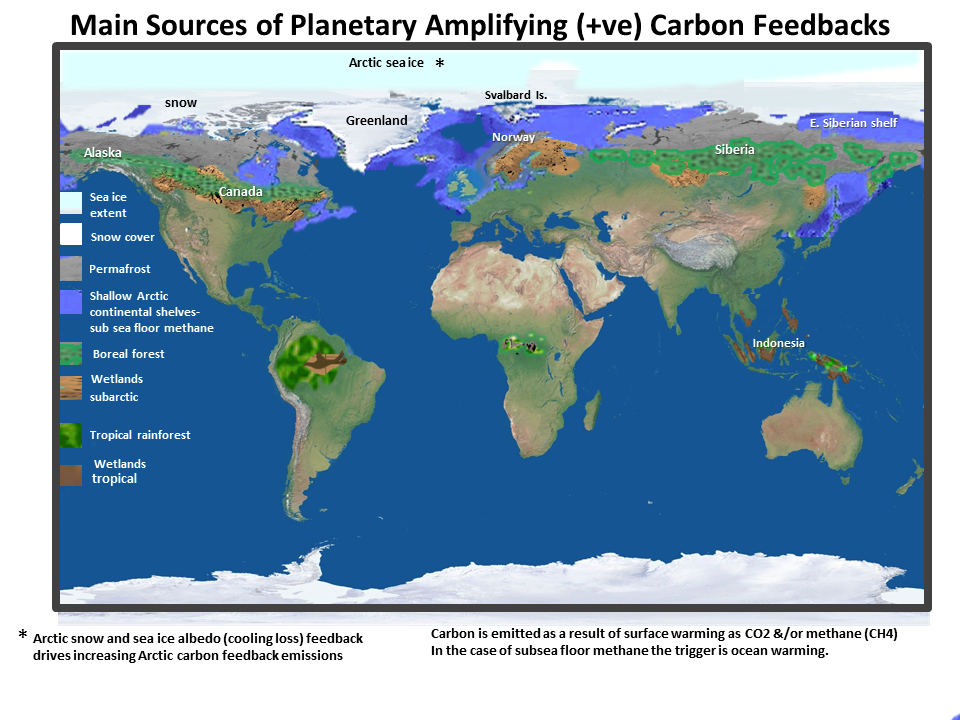
The greatest risk from global warming to humanity and all life
is the multiple combined 'cascading' Arctic climate feed backs.
These are the following.
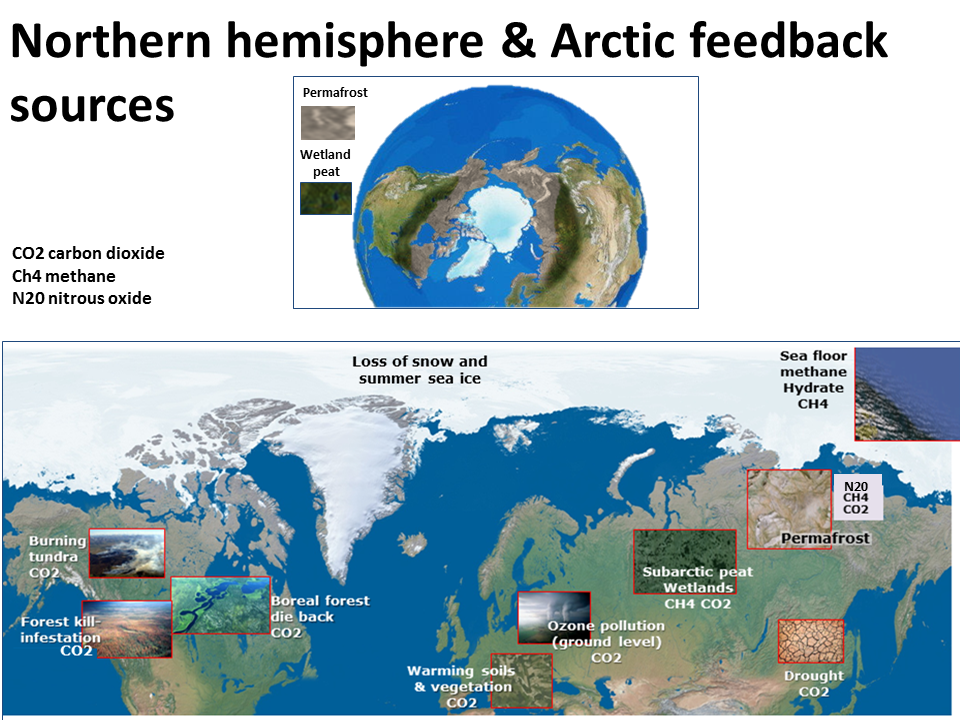
o Melting back of subarctic spring-summer snow cover.
o Melting decline of Arctic summer sea ice extent.
o Warming far north peat lands - emits methane.
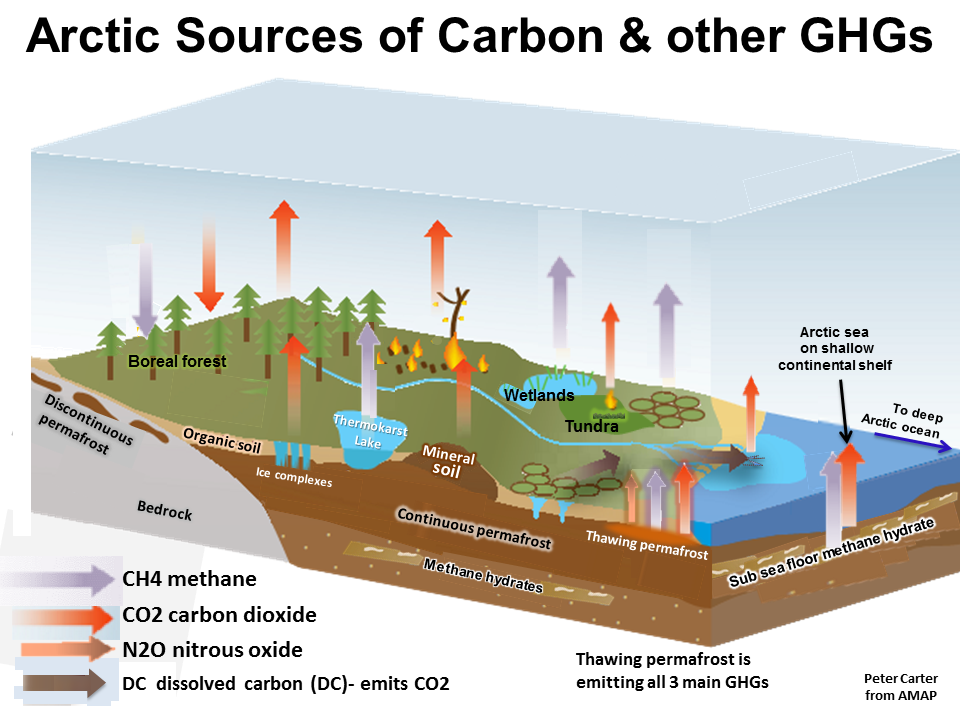
o Thawing permafrost - emitting methane & nitrous oxide.
o Melting sea floor Arctic methane hydrate - methane.
The greatest single risk is an abrupt spreading destabilization of sub sea floor methane hydrates.
THE IPCC
The IPCC uses climate computer models projections of global
temperature increase to estimate the future degrees of warming.
Models used to date in the IPCC warming projections do not include
the amplifying carbon cycle feedbacks that the scientists now call
'uncertainties'.
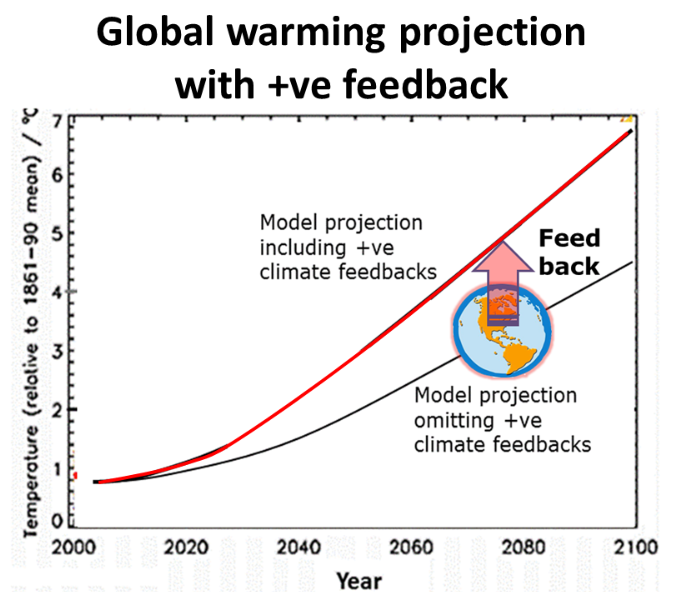
In the 2013 AR5 no (inevitable) extra carbon feedback warming was included in the new RCP scenario projections, and only the lowest terrestrial carbon feedback range was included in the AR5 carbon budget of more fossil fuels to burn. Consequently the AR5 global warming projection for business as usual isthe lowest since 1990. Unlike the AR4 the AR5 does not provide figure or formula for correcting the omitted terrestrial carbon feedback warming.
It is definite that carbon feedbacks will add to the warming over time.
For the A2 scenario, for example, the IPCC says the climate-carbon cycle feedback increases the corresponding global average warming at 2100 by more than 1.0°C.
A 2012 carbon cycle paper, High sensitivity of future global warming to land carbon cycle processes, finds the carbon feedback is large- at least 1.5C by 2100
Positive and negative feedback
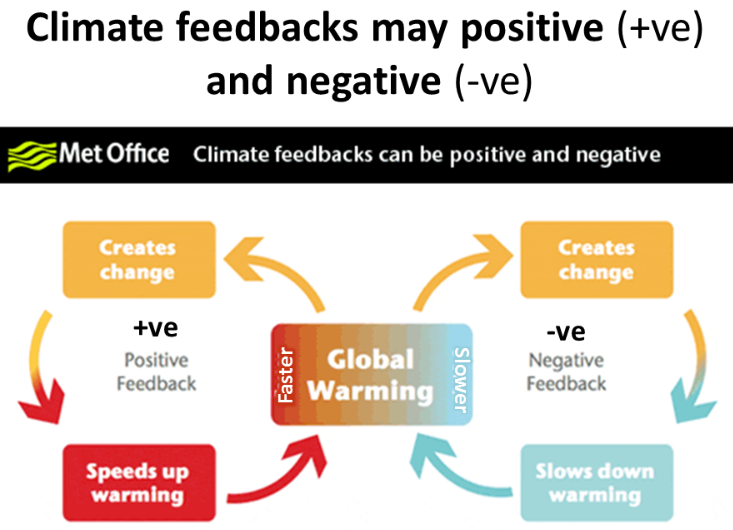
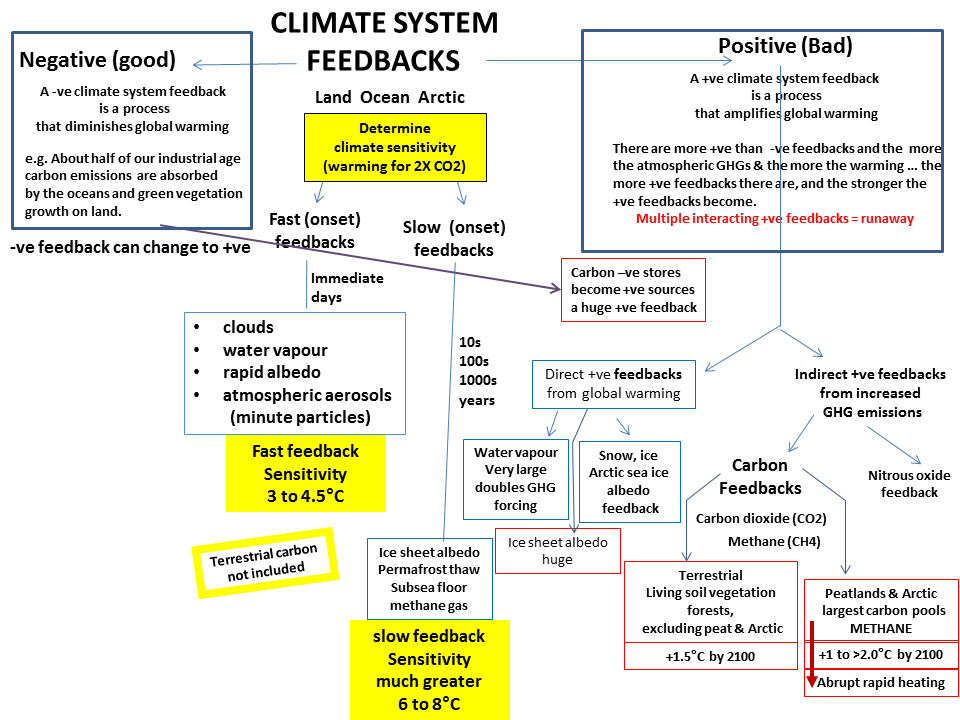
There are two kinds of feedback in terms of amplifying warming (+ve) or reducing warming (-ve).
We are most used to negative feedback systems used for safety. If a heater gets to hot there is a built -ve feedback that switches it off.
But in the climate system there is no such safety mechanism- feedbacks act in the dangerously +ve feedback way.
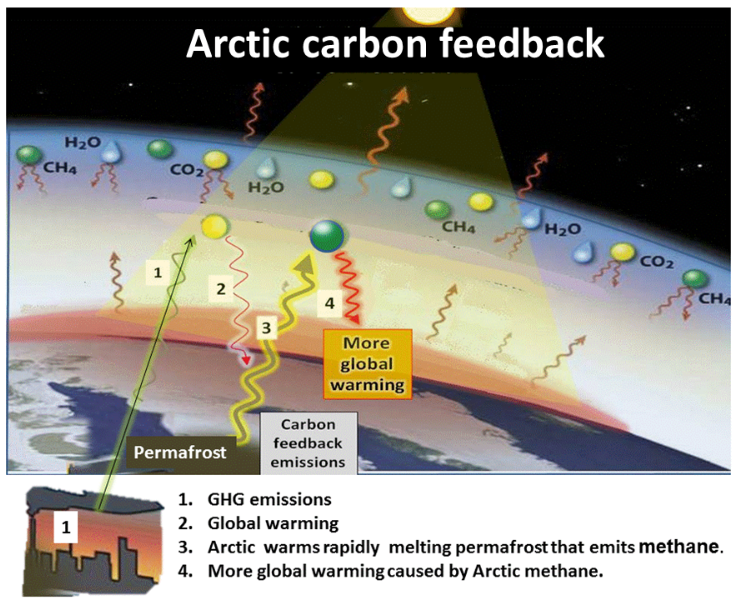
In the case of global climate change positive feedbacks to global warming lead to more global warming. Global warming causes more global warming
Furthermore the increased warming accelerates over time and temperature.
Climate system +ve feedback is a global warming impact multiplier.
Considering all the feedbacks the +ve feedbacks are incomparably larger the -ve, and
the more the warming the larger the +ve feedbacks (but not the -ve).
Positive feedbacks that operate by the planet emitting more carbon dioxide (CO2) or methane (CH4) are +ve carbon (cycle) feedbacks.
By definition positive carbon feedback is the greatest risk caused by global warming - because our industrial global warming responds by emitting carbon GHGs CO2 and methane and that boosts global warming more that increases carbon feed back even more etc... - in the ultimate vicious cycle.
There are a great many of the +ve feedbacks and Earth has vast pools (stores) of carbon vulnerable to global warming- the largest being Arctic.
The warming planet emits CO2 methane and nitrous oxide- thawing permafrost is doing all this now.
Climate system positive feedbacks or loops tend to be self perpetuating and accelerating making them catastrophically dangerous.
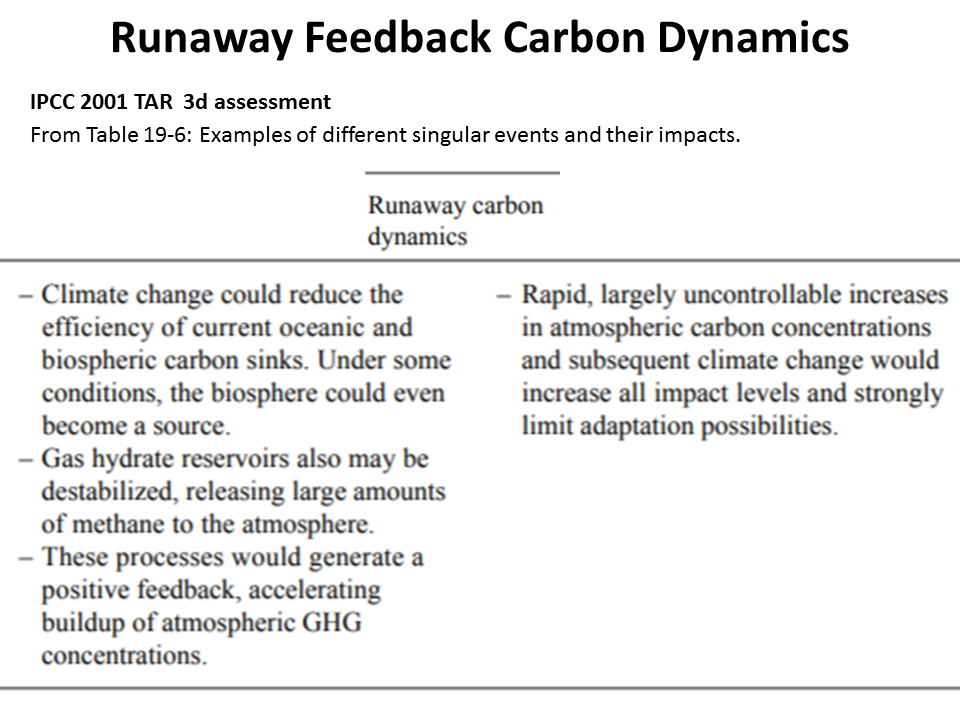
One positive feedback may increase one or more other positive feedbacks - 'cascading' feedbacks, which leads to runaway rapid warming.
The big example is the Arctic involving Arctic methane.
There are unforeseen positive feedbacks
The melting of glaciers forms deep channels of water torrents and lake at
the glacier base lubricating its retreat.
Fast and Slow feedbacks
There are 2 sorts of feedbacks in terms of their speed of response.
Fast feedbacks (or Charney feedbacks) are the only ones accounted for
by the IPPC in global warming projections are the fast feedbacks.
These act on an immediate time scale and are water vapor, clouds
(+ve & -ve) aerosols (+ve and -ve). latest research confirms the strong
water vapor feedback and that clouds have a net positive (bad) feedback
Water vapor is a GHG and the largest +ve feedback.
It about doubles the warming caused by a GHG alone.
Warm air holds more water as global warming increases so amplifying
the global warming by a factor of 2 for warming by GHG alone.
It is a fast feedback
Slow feedbacks are much slower to respond to warming, but as they do
they are very large and can lead to catastrophic accelerating degrees of
warming.
They are the albedo cooling loss from the loss of ice sheets, warming wetland
peat (high carbon), thawing permafrost (CO2 CH4 N2O) and sub sea floor methane.
These large slow feedback are excluded by the IPCC global warming projections
in the assessments. They are also not included in the calculation of the all
important climate sensitivity.
Research
by descending date
13 Jan 2021 Close
tipping point of the terrestrial biosphere
-50% by 2040
28 Sept 2020 The ocean has become more stratified with global warming (& feedbacks to AGW)
12 Aug 2020 Soil carbon loss by experimental warming in a tropical forest
Artificial warming> Large CO2 emissions
10 Aug 2020 Climate change: Warming world will be 'devastating' for peatlands (are larger) - GHG feedback emissions
29 May 2020 Pervasive shifts in forest dynamics in a changing world ( C sink weakening)
6 May 2020 Study shows wetter climate is likely to intensify global warming
Why ‘Carbon-Cycle Feedbacks’ Could Drive Temperatures Even Higher
The fate of carbon in a mature forest under carbon dioxide enrichment (forests take up more carbon but do not sequester) PDF
23 March 2020 Rising methane emissions from boreal lakes due to increasing ice-free days
6 March 2020 Tropical forests may be heating Earth by 2035. Carbon sink is failing.
4 March 2020 Asynchronous carbon sink saturation in African and Amazonian tropical forests
14 Feb 2020 Forest soils release more carbon dioxide than expected in rainy season
Feb 2020 Carbon release through abrupt permafrost thaw (large & not in models)
19 Feb 2020 Freshening of the western Arctic negates anthropogenic carbon uptake potential (Arctic Ocean carbon sink negated by Greenland run-off)
18 Feb 2019 World's biggest terrestrial carbon sinks are found in young forests (opposite -ve feedback)
3 Feb 2020
Carbon release through abrupt permafrost thaw (= much more heat) Article Permafrost collapse is speeding climate change
10 Jan 2020 Ice free Arctic Ocean allowed ancient carbon leaks
Dec 2019 NOAA Arctic Report Card Permafrost... the feedback to accelerating climate change may already be underway.
18 Nov 2019 Climate change could double greenhouse gas emissions from freshwater lakes
22 Nov 2020 Carbon-Cycle Feedbacks Operating in the Climate System
12 Nov 2019 Bacteria may contribute more to climate change as planet heats up
11 Nov 2019 Response of N2O production rate to ocean acidification in the western North Pacific
Oct 2019 Amazon is a Carbon Bomb, 17% deforested, now losing over three football fields per minute, could be just 2-3 yrs from tipping point
21 Oct 2019 Large loss of CO2 in winter observed across the northern permafrost region
21 Oct 2019 Climate change: Peatlands 'turning into carbon sources'
Oct 2019 Arctic & global methane Copernicus
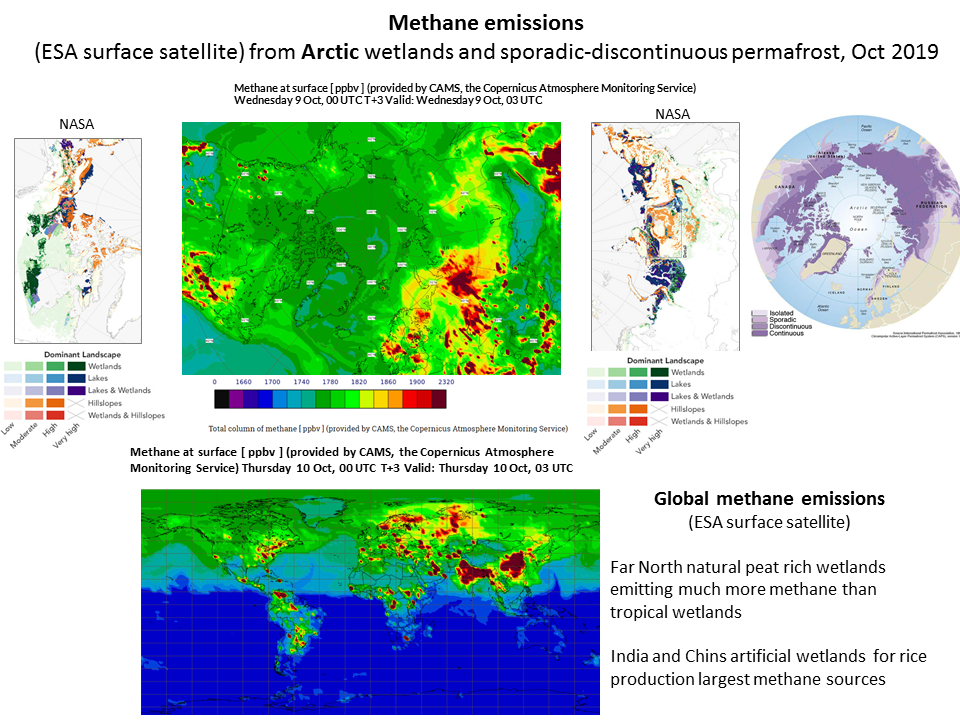
11 Sept 2019 Western Siberian rivers and lakes emit greenhouse gases into the atmosphere
Acid oceans are shrinking plankton, fueling faster climate change (acidification phytoplankton)
21 August 2019 Increasing wildfires threaten historic carbon sink of boreal forest soils, Xanthe J. Walker
24 June 2019 Damage to the ozone layer climate change forming feedback
20 June 2019 Climate change threatening the microscopic creatures our lives depend on, which could feedback
9 June 2020 Asynchronous carbon sink saturation in African and Amazonian tropical forests (C sinks saturating fast)
1 June 2019 millennial and fast-cycling soil carbon are equally sensitive to warming (ancient permafrost Carbon)
23 April 2019 Climate policy implications of nonlinear decline of Arctic land permafrost and other cryosphere elements
23 April 2019 Short science article on above Arctic warming will accelerate climate change (1st paper with permafrost & sea ice) My inclusion of the scenario projections
15 April 2019 Warming Arctic permafrost releasing large amounts of potent greenhouse gas (nitrous oxide)
20 March 2019 Thawing permafrost produces more methane than expected
23 March 2019 Evidence for non-steady-state carbon emissions from snow-scoured alpine tundra
18 March 2018 Very Strong Atmospheric Methane Growth FEEDBACK EMISSIONS
19 Nov 2018 Potential shift from a carbon sink to a source in Amazonian peatlands under a changing climate
15 Oct 2018 Forests greening but also C sink failing
17 Sept 2018 Path-dependent reductions in CO2 emission budgets caused by permafrost carbon release.
5 Sept 2017 Emerging role of wetland methane emissions in driving 21st century climate change
20 Aug 2018 Plants may absorb less carbon under climate change
NASA 20 Aug article on below Unexpected future boost of methane possible from Arctic permafrost- Abrupt thaws
15 Aug 2018 21st-century modeled permafrost carbon emissions accelerated by abrupt thaw beneath lakes
9 Aug 2018 NASA finds Amazon drought leaves long legacy of damage
Edward T. A. Mitchard
9 July 2018 Wetlands and permafrost feedback adds 20% to atmospheric CO2 by 2100, and most important for 1.5C limit.
17 April 2018 Amazon rain forest has become flammable
28 May 2018 Surfactant Invisible barrier on ocean surface (increases with warming) can reduce carbon uptake
4 May 2018 methane Greenhouse gas 'feedback loop' discovered in freshwater lakes
21 March 2018 Drought-induced changes in forest composition (USA) amplify effects of climate change
20 March 2018 Thawing permafrost produces more methane than expected Paper: Methane production as key to the greenhouse gas budget of thawing permafrost (much more methane)
11 March 2018 Methane Feedbacks to the Global Climate System (mainly wetlands to 2100)
23 Feb 2018 *Soil microbes' contribution to the carbon cycle in a warming world-enormous
Dec 2016 NOAA Arctic Report CardArctic switched from carbon sink to Source
5 Dec 2017 Amazon floodplain trees emit as much methane as all Earth’s oceans combined
17 Nov 2017 Plant respiration- a bigger feedback on climate than expected
30 Oct 2017 C. Koven Higher climatological temperature sensitivity of soil carbon in cold than warm climates. ...strong carbon–climate feedbacks from northern soils
16 Oct 2017 Nitrous oxide emissions are enhanced in a warmer and wetter world
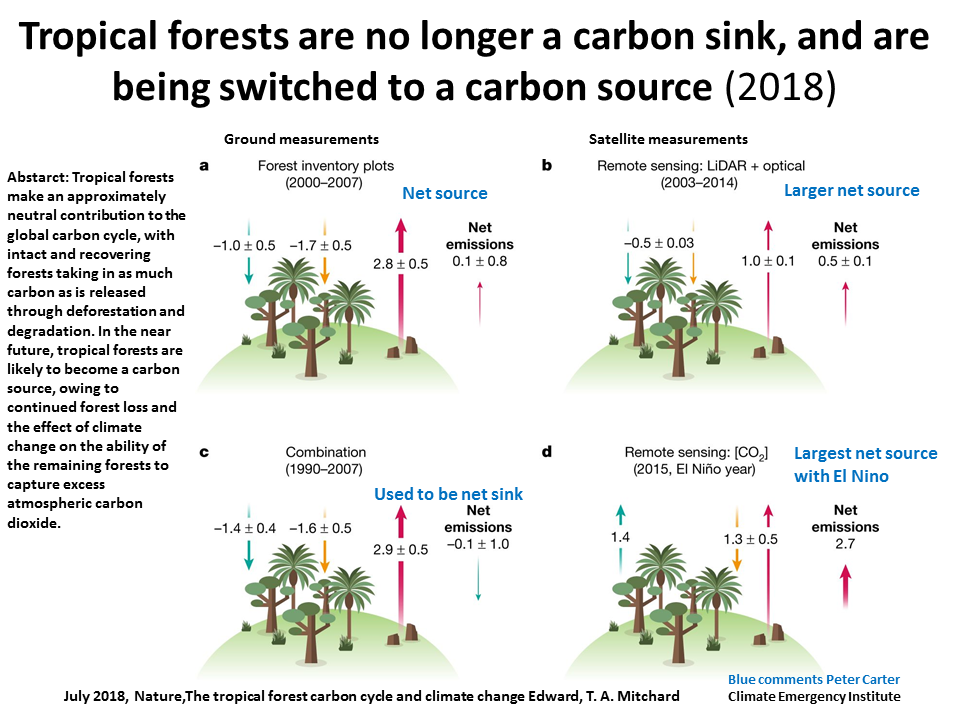
13 Oct 2017 Tropical forests are a net carbon source based on above ground measurements of gain and loss, A. Baccini
5 Oct 2017 Carbon feedback from forest soils will accelerate global warming, study finds
Sept 2017 Woods Hole Tropical forests are a net carbon source
Paper Tropical forests are a net carbon source now based on above-ground measurements of gain and loss.
April 2017 Amazon 21st century drought-related fires -carbon emissions
8 May 2017 Carbon dioxide sources from Alaska driven by increasing early winter respiration from Arctic tundra
Feb 2017 Greenhouse gas emissions from tropical
forest degradation: an underestimated source
Timothy R. H. Pearson
Feb 2017 B. Parker Radiative Forcing, Climate Sensitivity, and Global Warming.
'The combination (of all drivers)) is probably sufficient to lead to "runaway global warming" (8-10°C, not like Venus) as the additional warming causes additional greenhouse gases to be released in the Arctic region in a feedback loop.
20 Feb 2017 Warming ponds accelerate climate change (methane Carbon switch)
ARCTIC SWITCHED CARBON SINK TO SOURCE NOAA 2016 Arctic Report Card
Dec 2016 [Projects W. US megadrought C source]
Reduction in carbon uptake during turn of the
century drought in western North America
Christopher R. Schwalm
1 Dec 2016 Soil carbon
feedback. Physorg
For 1C warming soil
carbon emissions =
2X human emissions
Coastal blue carbon
28 July 2016 Isolating the Temperature Feedback Loop and Its Effects on Surface Temperature
20 April 2016 ..permafrost
disturbance changed the
high Arctic tundra system
from a sink to a source
for CO2 during the majority
of the growing season
20 Mar 2016 Changing
temperature response of
respiration turns boreal
forest from carbon sink
into carbon source
Mar 2016 Carbon sink to
source possible by 2030
Drivers and patterns of
land biosphere carbon
balance reversal
Christoph Müller
The terrestrial biosphere
as a net source of
greenhouse gases to the
atmosphere
22 Feb 2016 Study shows
Arctic ecosystem shifting
from carbon sink to carbon
source
Jan 2016 MIT Annual carbon
sequestration rate in
protected areas such
as rainforests will decline
by about 40 percent
between now and 2100.
14 Oct 2015 Bubble plumes
off Washington, Oregon
suggest warmer ocean
may be releasing frozen
methane
Nov 2015 Royal Society
special edition Feedbacks
on climate in the Earth system’ Intro
Feedbacks, climate sensitivity and the limits of linear models
Oct 2015 Net above ground biomass declines of four major forest types with forest ageing and climate change in western Canada's boreal forests.
...to estimate the permafrost carbon–climate feedback
Sept 2015 Forest carbon source New estimates of CO2forest emissions and removals: 1990–2015
Sandro Federici
Northern forests face onslaught from heat and drought- as well as other world forests
14 July 2015 Global wildfires on the rise
7 July 2015 warming mosses emit nitrous oxide
June 2015 Woods Hole Inst. Permafrost & climate change catastrophic runaway potential
June 2015 Global warming: Growing feedback from ocean carbon to climate
pdf full paper
30 March 2015 Causal feedbacks in climate changeEvidence for a positive feedback in climate change in ice age cycles : Global warming itself will accelerate warming
23 April 2015 Warming climate may release vast amounts of carbon from long-frozen Arctic soils
23 April 2015 New Study Finds Clouds are Amplifying Human Warming
15 April 2015 Increased atmospheric CO2 limits soil storage
23 April 2015 Thawing permafrost feeds climate change
Expert survey Permafrost zone carbon balance from 2013
20 April 2015 Study reveals 'two faces' of phytoplankton, +20% Arctic feedback
20 April 2015 Future productivity and carbon storage limited by terrestrial nutrient availability- carbon source by 2100
7 April 2015 Permafrost thawing-accelerate global warming
6 April 2015 Permafrost thawing in organic Arctic soils accelerated by ground heat production
3 April 2015 Climate change, plant roots may accelerate carbon loss from soils
30 March 2015 How Long Can Oceans Continue
To Absorb Earth’s Excess Heat?- heat sink may be starting to fail.
18 Mar 2017 Long-term decline of the Amazon carbon sink
18 Mar 2015 Computer sims: In climatic tug of war, carbon released from thawing permafrost wins handily
15 Mar 2015 Global methane and nitrous oxide emissions from terrestrial ecosystems due to multiple environmental changes Hanqin Tian,
30 March 2015 Direct evidence for a positive feedback in climate change (natural warming out of ice ages). Global warming will lead to more warming.
March 2015 J. Randerson prestn Climate-carbon feedbacks to 2100 and beyond.
March 2015 Amazon rainforest ability to soak up CO2 is falling
March 2015 C. Doughty Drought impact on forest carbon - in Amazonia uptake reduced
26 Feb 2015 Positive feedback of elevated CO2 on soil respiration in late autumn and winter
Jan 2015 - peatlands New research outlines global threat of smoldering peat fires
Jan 2015 Peatland carbon accumulation over millennia (huge slow)
Dec 2014 Huge soil carbon feedback-B. Sulman Microbe driven turnover ...
Sept 2014 Sunlight key to permafrost CO2 emissions
2014 Current systematic carbon-cycle observations & need for implementing ...carbon observing system P. Ciais
Sept 2014 K Karhu
Carbon stored in world's soils more vulnerable to climate change than expected- esp Boreal Arctic.
Aug 2014 Wide spread methane leakage (from hydrate) from ocean floor off US coast
April 2014 Carbon loss from soil Univ. Arizona accelerating climate change.
July 2014 The declining uptake rate of CO2 by land and ocean sinks.
M. R. Raupach
2 May 2014 Faster Decomposition Under
Increased Atmospheric CO2
Limits Soil Carbon Storage
April 2014 wetlands responsible for new atmospheric methane increase
April 2014 Study finds accelerated soil carbon loss, increasing the rate of climate change
Mar 2014 G. Yvon-Durocher Methane fluxes Global warming to have a large impact on emissions from freshwater ecosystems increasing methane & CO2.
C. Lavergne Mar 2014 Cessation of deep convection in the open Southern Ocean under climate change. This has a feedback effect
R. Bernardello Mar 2014 Response of the Ocean Natural Carbon Storage to Projected Climate Change 'With climate change we predict that the ocean will lose some of its deep, natural carbon in the future'
Feb 2014 Amazon projected to become net carbon source Nature Drought sensitivity of Amazonian carbon balance
Jan 2014 Tropical ecosystem +ve carbon feedback. Over the past 50 years tropical ecosystems have become 2X as sensitive to climate with a declining capacity to store carbon.
2013 Trends and drivers of regional sources
and sinks of carbon dioxide over the past
two decades
Dec 2013 Boreal forests threaten to produce climate-warming gases
30 Oct 2013 Warming will disturb balance of soil nutrients in drylands, make drylands less productive, and act as +ve carbon feedback
Aug 2013 First signs of carbon sink saturation in European forest biomass
Feb 2013 Wetland trees a significant overlooked source of methane
2012 ..terrestrial ecosystem carbon response to CMIP5 climate change projections
Plankton
Sept 2013
Tiny plankton
gain big +ve feedback
Sept 2013 Plankton
changes change
ocean chemistry.
Aug 2013 Ocean Acidification Amplifies Global Warming via less cooling DMS
UK Science Museum, Climate feedback video
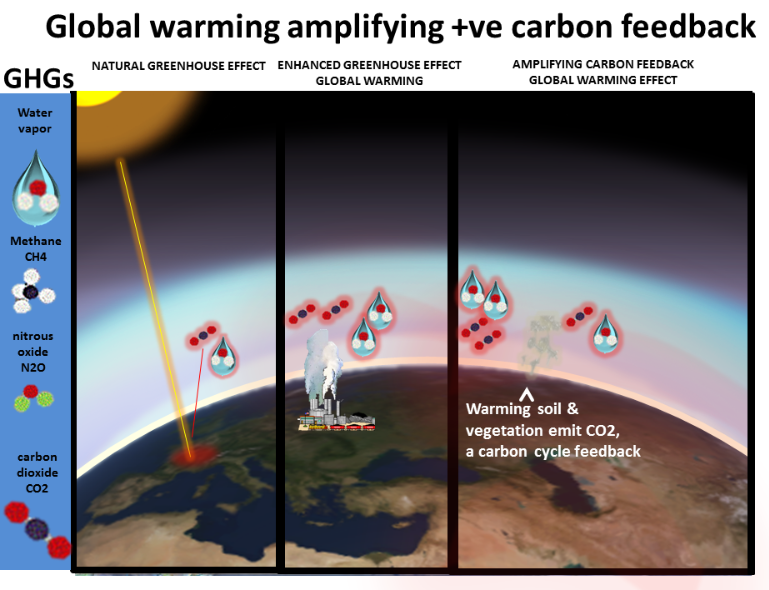
The science of global climate change is all about feedbacks -
these mostly positive (bad) amplifying feedbacks. As global
warming increases so do the +ve feedbacks. What negative
feedbacks there are have little effect.
Global warming inherently increases global warming.
The biggest feedbacks were predicted long ago, but are kicking in much
sooner than expected.
It is the biggest reason why we are in a state of dire planetary emergency.
The 2014 IPCC AR5 assessment finds that the carbon cycle will be a +ve
(amplifying) feedback this century. The highest estimate of extra carbon
feedback warming in the AR5 is 1.8C by 2100 (B. Booth). How ever,
'many key processes relevant to decomposition of carbon are missing in
models (Todd-Brown et al., 2012), and particularly for permafrost carbon
and for carbon in boreal and tropical wetlands and peatlands, despite the
large amount of carbon stored in these ecosystems and their vulnerability to
warming'. (IPCC AR5 WG2 ch 6 p 40).
Also 'the negative effects of elevated tropospheric ozone on NPP (plant growth) have not been taken into account by most current carbon cycle models'. 'Plants are known to suffer damage due to exposure to levels of ozone (O3) above about 40 ppb (Ashmore, 2005). Model simulations of plant O3 damage on the carbon cycle have found a reduction in terrestrial carbon storage 2005 - 2100 up to 260 PgC (Sitch et al., 2007) AR5 Ch 6.
Today most of the largest sources of catastrophically dangerous feedbacks are operant or triggered, and today we are committed to a far greater degree of global warming - that will cause far greater feedbacks accelerating the rate of warming. Note the rate of warming is critical to ecosystems, species, and agriculture.
It is shocking therefore that the IPCC omits the inevitable large increase in global warming due to the largest +ve feedbacks and in the 2013 AR5 omitted all carbon cycle warming from its RCP scenario global warming projections.
The largest source of amplifying carbon feedback by far is subsea floor frozen sold pressurized methane gas -hydrate. The methane hydrate situation is far worse than
we ever imagined.
Jan 2013 Extreme emission of N2O from tropical wetland soil South America
2011 Science The 2010 Amazon Drought S. Lewis Switching to net carbon source
July 2011 Soil microbes accelerate global warming - more CO2 leads to more emissions of CH4 & N2O
Dec 2010 Cloud 'feedback' affects global climate and warming- amplifies
Sept 2013 Stratospheric water vapor feedback (in addition to the lower atmosphere tropospheric feedback.
CLIMATE EMERGENCY INSTITUTE
The health and human rights approach to climate change
2015 Planetary amplifying feedback confirmed The big (Mar 2015) climate change feedback news is that the strong +ve amplifying natural GHG feedback (CO2-methane-nitrous oxide) that ends ice changes by switching to an interglacial warm period, is confirmed by research (global warming does increase warming). University of Exeter. "Direct evidence for a positive feedback in climate change: Global warming itself will likely accelerate warming." ScienceDaily.
The most dangerous of all feedbacks to the planet is methane from melting sub-sea floor frozen solid methane gas hydrates, and from Oct 2015 research it looks like it has started, as also previously suggested by Arctic research.
2014 NAS Royal Society 'Models vary in their projections of how much additional warming to expect, but all such models agree that the overall net effect of feedbacks is to amplify the CO2-only warming by a factor of 1.5 to 4.5'.
23 April 2015 research ARCTIC MULTI-FEEDBACK RUNAWAY EFFECT
The more we research the more we find that many large +ve amplifying
feedbacks will greatly accelerate global climate change, and are already trigerred.
Definition The NOAA says a positive feedback is a process in which an initial change
will bring about an additional change in the same direction. A feedback loop then
does not have to be complete to the point of an global warming increase.
A feedback exists if the process is established whereby warming will be made to increase.
The best example of a climate change amplifying feedback due to global warming (already happening) is increased forest fires that emit CO2.
The present biggest feedback is a fast acting one due to water vapour, which is a GHG. Warmer air holds more water vapor hence a +ve feedback. The water vapor feedback doubles the warming caused by a GHG alone. 2014 research
determined that this will act as an increasing climate change amplifier.
The 2014 IPCC AR5 found that 'Based on Earth System Models, there is high confidence that the feedback between climate change and the carbon cycle will amplify global warming', but the AR5 published model projections of warming did not account for any of the large planetary sources of amplifying carbon feedbacks.
Carbon feedback sources carry on emitting so long as the warming that triggered them lasts, & the higher the warming the greater the feedback - projected to make global warming last over 10,000 years (2013 R. Zeebe).
July 2013 B. Stocker Multiple greenhouse-gas feedbacks (CH4 & N2O) from the land
biosphere under future climate change. LAND NET CARBON SOURCE BY 2100)
July 2013 NASA Tropical ecosystems boost CO2 as temperatures rises
August 2012 Diseased trees new source of climate methane gas
July 2012 Arctic warming linked to combination of reduced sea ice (feedback) and global atmospheric warming (global warming)
Feb 2013 Time-dependent climate sensitivity (increased by feedback) & legacy of
GHG emissions (last 23,000–165,000 yrs
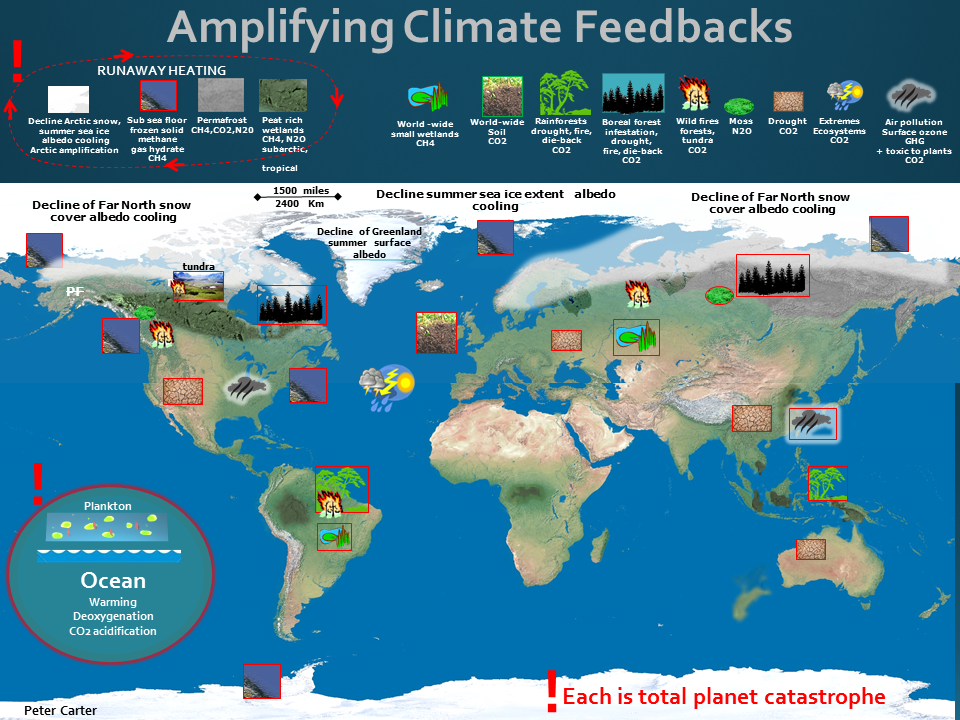
UK Science Museum What are climate feedbacks
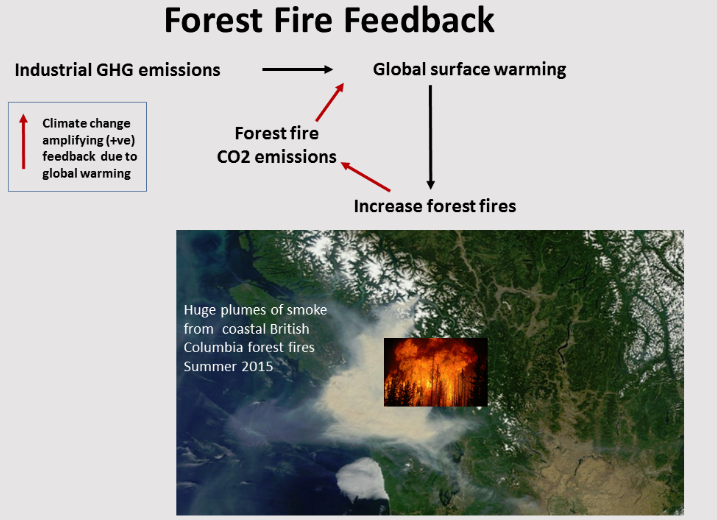
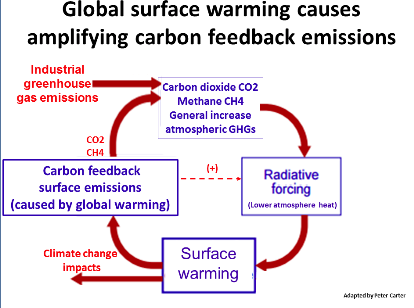
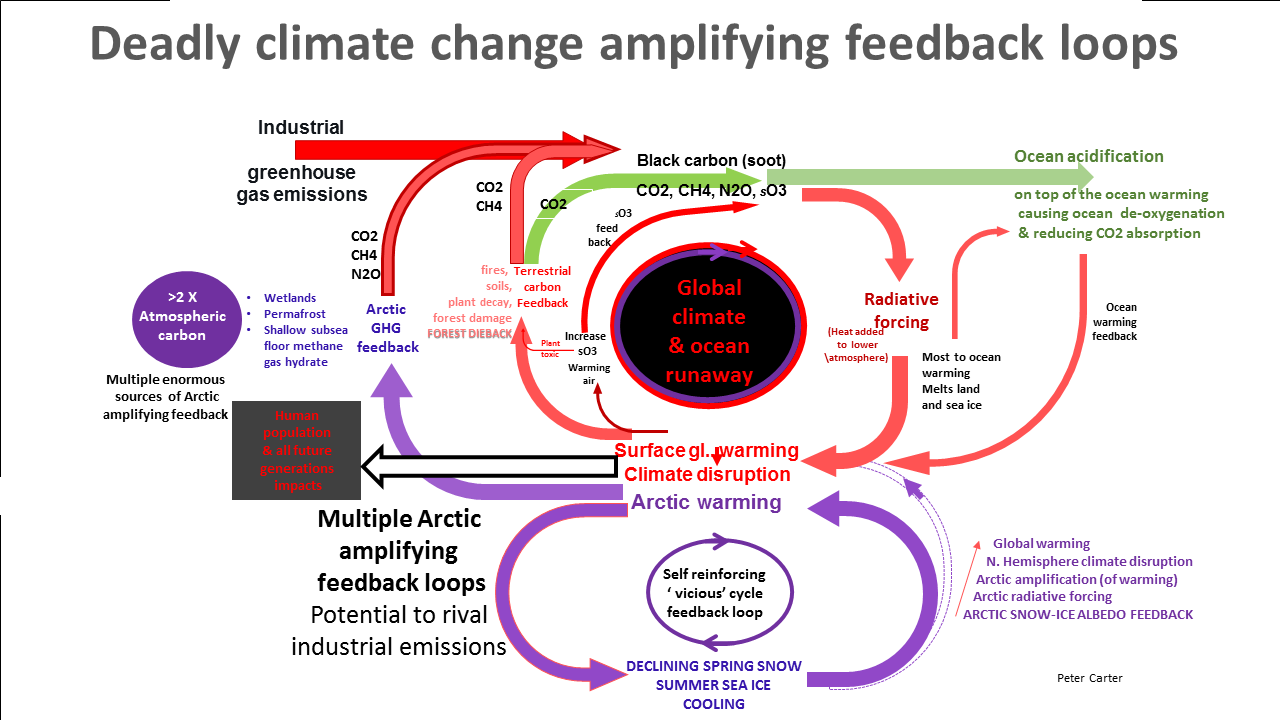
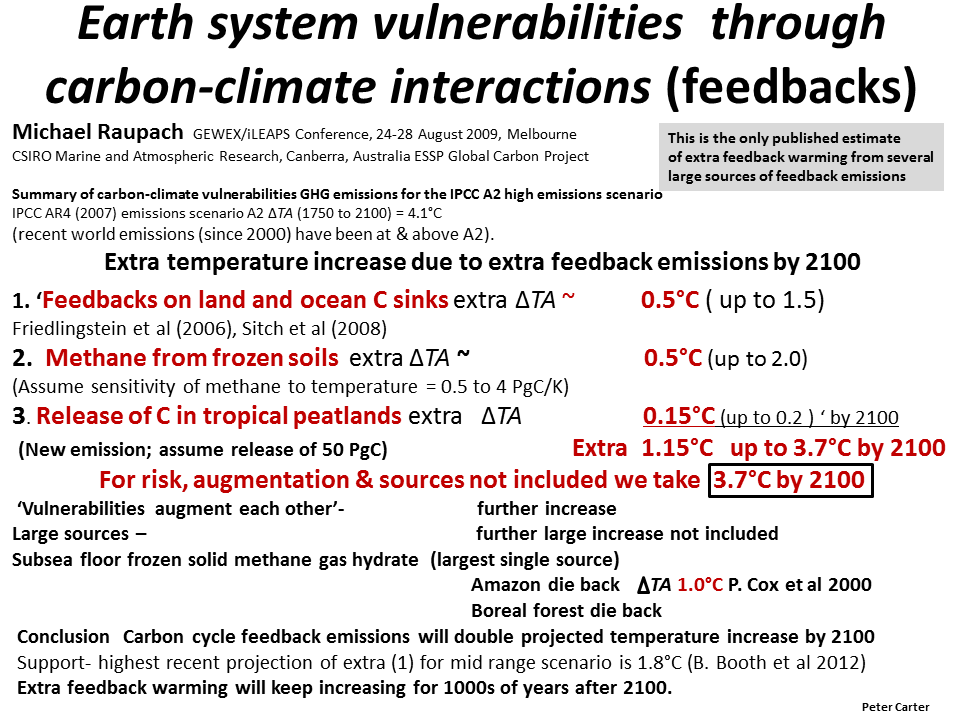
M. Raupach 2009 Amplifying extra carbon feedback emissions will double temperature increase by 2100 .
July 2012 Reduction in carbon uptake during turn of the century drought in western North America C. Schwalm [Projected to increase].
We show that the area-integrated strength of the western North American carbon sink declined by 30–298 Tg C yr−1 during the 2000–2004 drought. We further document a pronounced drying of the terrestrial biosphere during this period, together with a reduction in river discharge and a loss of cropland productivity. We compare our findings with previous palaeoclimate reconstructions and show that the last drought of this magnitude occurred more than 800 years ago. Based on projected changes in precipitation and drought severity, we estimate that the present mid-latitude carbon sink of 177–623 Tg C yr−1 in western North America could disappear by the end of the century
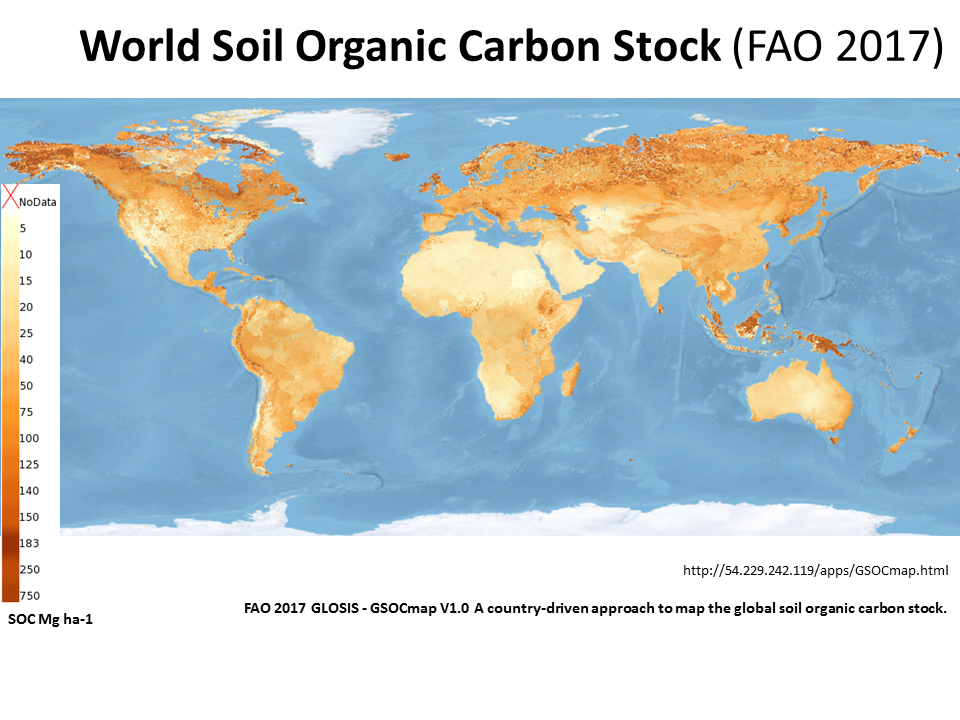
*We are releasing about 10 billion metric tons of carbon into the atmosphere per year. The world's soils contain about 3,500 billion metric tons of carbon. If soil carbon is added to the atmosphere due to microbial activity in warmer soils, that will accelerate the global warming process. And once this self-reinforcing feedback begins, there is no way to turn it off.
Ice age cycles are feed-back GHG emissions driven by tiney increases in insolence , science paper
The Arctic has switched from carbon sink to source from permafrost thaw
